Volume 24, Issue 3 | Autumn 2025

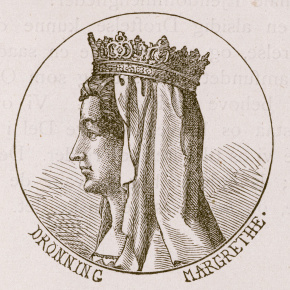
“A Strange Woman Slumbers”: The Reframing of the Medieval Queen Margrete’s Sarcophagus by the Danish Women’s Movement and the Artist Agnes Slott-Møller
In 1885 the Danish Women’s Society began publishing the journal Kvinden og Samfundet (Woman and society) and selected the medieval queen Margrete I (1353–1412) as the figure on the cover’s nameplate. The representation of the queen was modeled after the effigy on her sarcophagus. This article explores how this image of the queen was employed to further the agenda of the Danish women’s movement and how the artist Agnes Slott-Møller developed representations of the queen in dialogue with women from key institutions related to the movement. In doing so, it argues that the portrayals of the queen both supported a nationalist agenda and served a progressive cause.
DOI
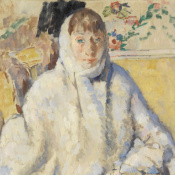
Nel Duerinckx and Rik Wouters: Collaborative Creation, Domestic Work, and Building a Legacy
This article focuses on Nel Duerinckx (1886–1971), the wife of the Belgian painter and sculptor Rik Wouters (1882–1916). Her extensive archive, comprising a book, several manuscripts, and hundreds of letters, allows for a nuanced exploration of her central role in Wouters’s life and art. A close reading of anecdotes in these sources sheds light on the various ways in which Duerinckx supported Wouters during his career through collaborative creation and domestic work, and the way she shaped his legacy after his death. This case study puts forward more inclusive modes of writing art history, which acknowledge the importance of the artist’s support system.
DOI
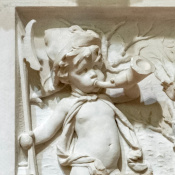
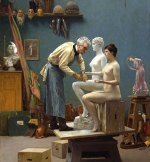
A Man for All Seasons: Karl Bitter and the Twelve Months Panels for the Huntington Mansion in New York City
In the early 1890s, Austrian-born sculptor Karl Bitter produced the Twelve Months Panels for the Fifth Avenue New York City mansion of Collis P. Huntington and his wife Arabella. This marble frieze, now installed at the John and Mable Ringling Museum of Art in Sarasota, Florida, offers a humorous though often cryptic critique of Gilded Age culture, poking fun at the Labors of the Months as a genre, condemning private patronage as a practice, and casting doubt on sculpture as a contemporary art form, self-consciously suggesting that it was already a thing of the past.
DOI
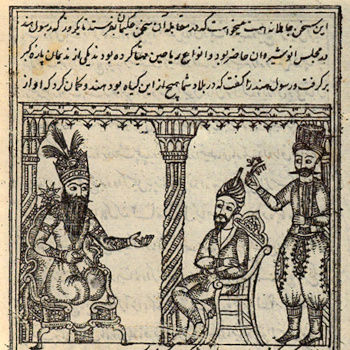
Conflating Past and Present: Representations of Ancient Iranian Kingship and Royal Justice in Nineteenth-Century Illustrated Qajar Cosmographies
Zakariyyā al-Qazwīnī’s cosmography, ‘Ajā’ib al-makhlūqāt wa-gharā’ib al-mawjūdāt (Wonders of creation and oddities of existing things), is a compendium of the components of heaven and earth from an Islamic perspective. It was a popular text in Islamic lands from the late thirteenth through the nineteenth centuries. This article examines changes to the illustration program in a manuscript of the cosmography (1816) and in the earliest lithographic edition of the cosmography (1848), both produced in Iran when the Qajar dynasty was in power. The illustrations represent historical and mythical kings and heroes with the features of Qajar royals, and a medieval Persian theory of kingship with Qajar attributes. The images introduced by nineteenth-century Persian artists into the cosmography’s centuries-old pictorial program reveal what the Qajars emphasized in their perception of the world: their link to Iran’s past ruling dynasties and their just and righteous form of governance.
DOI
New Discoveries
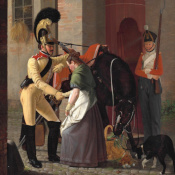
Ditlev Blunck, A Street Scene, 1828
 
DOI
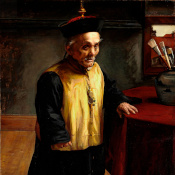
Sally Philipsen, Portrait of the Chinese Craftsman and Dwarf Tjong Fu’hk Wong Waih, 1904
 
DOI
Practicing Art History
The Evolving Archive, part 1
 
DOI

Supported by:

Reviews
Book Reviews
Exhibition Reviews