French Sculpture: An American Passion by Laure de Margerie with a contribution by Antoinette Le Normand-Romain
Reviewed by Caterina Y. PierreCaterina Y. Pierre
Kingsborough Community College
The Pratt Institute
Email the author: caterina.pierre[at]kbcc.cuny.edu, cpierre[at]pratt.edu
Citation: Caterina Y. Pierre, book review of French Sculpture: An American Passion by Laure de Margerie with a contribution by Antoinette Le Normand-Romain, Nineteenth-Century Art Worldwide 24, no. 1 (Spring 2025), https://doi.org/10.29411/ncaw.2025.24.1.11.
This work is licensed under a Creative Commons Attribution-NonCommercial 4.0 International License  unless otherwise noted.
Your browser will either open the file, download it to a folder, or display a dialog with options.
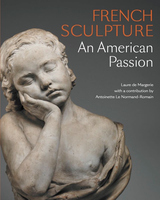
Laure de Margerie with a contribution by Antoinette Le Normand-Romain,
French Sculpture: An American Passion.
Ghent: Snoeck/Institut national d’histoire de l’art (INHA), 2023.
496 pp.; 450 color and b&w illus.; bibliography; index of names.
$65.00 (hardcover)
ISBN: 9789461618269
The love affair between collectors and institutions in the United States and French art has been long established and continues through our current century. For its blossoming, we have the Freemasons to thank—in 1778, the French sculptor Jean-Antoine Houdon met Benjamin Franklin at Les Neuf Soeurs, a lodge in Paris, and immediately carved the American’s portrait. Their meeting certainly led to the eventual commission, officially made by Thomas Jefferson, of the now famous and much reproduced marble standing portrait of George Washington (dated 1788, delivered 1796; Virginia State Capital, Richmond). Rather than work from drawings, Houdon traveled from Paris to Philadelphia in 1785 and worked from life, exact measurements of Washington’s body, and life casts made to bring back with him to Paris. The brilliance of Houdon’s craft is fully contained in the finished product: the artist was able to combine the image of a modern statesman with subtle references to the classical past that do not overly depend on classical tropes, as Horatio Greenough arguably did with his seated Washington (1840; Smithsonian American Art Museum, Washington, DC), which, while establishing an important precedent for US sculpture and a direct connection between US art and study in Rome, borders on the ridiculous.
Laure de Margerie takes Houdon’s invitation to the United States as one of the starting points for her recent publication French Sculpture: An American Passion. The book is the culmination of a career’s worth of disciplined scholarship on French sculpture, but it is also the result of a project that began in earnest in 2009, when de Margerie began compiling an illustrated database of French sculptures made between 1500 and 1960 in US public collections, known as the French Sculpture Census.[1] The book under review here is primarily her endeavor, but she is joined by Antoinette Le Normand-Romain who contributes a large section of the book (essentially chapter 4, though the sections of the book are not numbered or called “chapters”) on Auguste Rodin entitled “Collecting Rodin” (360–454). According to de Margerie’s forward, almost 10 percent of all French sculptures in US collections were made by Rodin (11), warranting this special treatment of a single artist. The additional sections of the book are entitled “Politics Through Sculpture,” “Sculpture as Décor,” “Collecting Sculpture,” and “An Ongoing Passion.” De Margerie explains the trajectory of her project, noting that it was through the creation of the database—once it had reached seven thousand entries—that she could begin to detect “trends, periods, and tastes; identifying key figures, dealers, collectors and curators; and understanding the supply channels of this transatlantic trade” (11).
De Margerie begins her introduction with an important statement about the special place in the world that sculptures inhabit. As they are usually three-dimensional, they seem to physically embody a person more than paintings do. Objects that are “graven” (engraved, etched, but more broadly, sculpted) have always been believed to have the power to hold the very essence of the living figure they depict, so much so that even God, through Moses, warned against their worship. Hence, sculptures remain the focus of much debate and the target of many attacks, both intellectual and physical. Sculptures of Jefferson and others who held similar stances on slavery, for example, often appear on city council dockets for removal, while paintings of the same individuals are rarely subjected to the same scrutiny. A painting can just be taken off a wall and placed into deep storage; few individuals or institutions will really consider the complete destruction of a flat object. This is not so for life-sized incarnations of historical figures. The introduction continues with discussions of the earliest sculptures created for the United States that are still extant, including the first, the Montgomery Monument (1777) at St. Paul’s Chapel in lower Manhattan by Jean-Jacques Caffieri. The French were on the side of the Revolutionary Americans, and the employment of French artists during the revolutionary period acted as both a political and cultural union (14–15). Travel to Europe and the beginnings of the contemporary art market significantly affected the collection of French sculpture by North American collectors in the nineteenth century (15–17), and the growth of the field of architecture and design in the United States resulted in both the copying and commissioning of French sculptures in large numbers (18–19).
The first chapter, “Politics Through Sculpture,” focuses on sculptures that connected France with the key figures in the newly established United States, such as the aforementioned portrait of Franklin by Houdon (1778; The Metropolitan Museum of Art, New York) and others by Houdon such as the busts of Robert Fulton (1804; Detroit Institute of Arts, Detroit) and Joel Barlow (The White House, Washington, DC), displayed as pendants in the 1804 Paris Salon exhibition (28). Other important French sculptors are discussed, such as Jean-Baptiste Binon and Pierre-Jean David d’Angers, the latter of whom produced some of the most important relief medals of great historical figures, such as the bronze medal of James Fenimore Cooper (1833; The Metropolitan Museum of Art, New York). Specific historical events warranted important artworks, and the assassination of Abraham Lincoln necessitated many sculptural memorials and depictions. Léon Falconnier’s The Emancipation of the Slaves of America by President Lincoln (1865; Abraham Lincoln Presidential Library and Museum, Springfield, IL), which depicts a kneeling enslaved person gazing appreciatively at Lincoln, follows the typical trope seen in other “white savior” images of Lincoln from the period. More interesting is the unique gold medal of Lincoln (1866; Library of Congress, Washington, DC) by Franky Magniadas, which was supported by a public subscription and sent to Mary Todd Lincoln by the French commissioners of the work (41–43).
The chapter continues with a significant study of French art at the universal exhibitions and world’s fairs, which allows de Margerie to bring in a few works by women shown in the 1893 World’s Columbian Exposition in Chicago, such as Psyche in the Grip of Mystery (1889; Petit Palais, Paris) by Hélène Bertaux, and Anne de Rochechouart (duchess of Uzès, known professionally as Madame A. Manuela), a sculptor of whom more should certainly be known (71). Coverage of the fairs continues up to the 1939–40 World’s Fair in New York. The chapter also includes public monuments by French sculptors. While everyone is quite aware of the Frederic-Auguste Bartholdi Liberty Enlightening the World (completed 1886; Liberty Island, New York), de Margerie’s study also includes public works such as Alexandre Falguière and Antoine Mercié’s Major General Marquise Gilbert de Lafayette (1890; Lafayette Square, Washington, DC) and Mercié’s Robert E. Lee (1890; formerly Monument Avenue, Richmond). The discussion of Mercié’s public art permits the author to delve into a discussion, albeit brief, of contemporary vandalism, such as that perpetrated against his monument to Francis Scott Key (1911; Baltimore) in 2017, deservedly so considering Key’s pro-slavery position (122). I was particularly intrigued by the discussion, at the end of this section, of the Merci Train (1949, currently unlocated), an actual train filled with 52,000 objects donated by French citizens as a “thank you” to the United States after World War II. The train included objects of French art, such as medals and “liberty landmarks,” or small sculptures that commemorated the liberation of France in 1944 (139).
The second section of the book, “Sculpture as Décor,” covers the French sculptural works that decorate building façades and fountains around the United States. Additional decorative works by Bartholdi as well as Jules Coutan’s glorious Mercury Flanked by Hercules and Minerva (Glory of Commerce) (1914; Grand Central Terminal, New York) begin the discussion. The author brings in a study of materials in this section, such as the use of cast iron for sculptures like the Brewer Fountain (1855–68; Boston Common, Boston) by Mathurin Moreau and Michel Liénard. Also discussed here at length is the issue of whether it was better to cast metal sculptures in France (where the foundries already had a long and important history), or to cast them in the United States, which saved on shipping costs but sacrificed quality (170–77). The section is rounded out by a short examination of sculpture intended for gardens and parks, including early examples such as Christophe Fratin’s Eagles and Prey (1850; Central Park, New York) and Auguste Cain’s Tigress and Cubs (1866–67; Central Park Zoo, New York).
The third section, “Collecting Sculpture,” truly gets into the heart of how so many French sculptures arrived in the United States. One of the earliest dealers in the United States, Samuel P. Avery, favored French sculpture and brought art back from Paris that fulfilled his vision of what should be collected—contemporary art by “young and out-of-the-way” artists—for profit but also “for the satisfaction of discovering and furthering unrecognized talent” (206). George A. Lucas brought back from France works by the animalier sculptor Antoine-Louis Barye, single-handedly creating a market in the United States for such works. Lucas’s own collection, now shared between the Walters Art Museum and the Baltimore Museum of Art, boasts 170 works by Barye alone (208). The taste for animalier sculpture was fueled, according to the author, by both a connection to the vast wilderness of the United States and a melancholy inspired by its disappearance as the century progressed (216).
The reticence towards nude figures, as de Margerie also notes, was an additional factor for the appreciation of animalier sculpture. People of the United States are, and always have been, prudish in their public-facing mode, but they are also, and at the same time, among the greatest consumers of sexually explicit content. The Greek Slave (1841–46) by Hiram Powers woke the Americans up from their public cultural snooze. The rise of interior design in the United States also facilitated the desire for small-scale sculpture of both animals and nude figures. Examples from the Vanderbilt mansion make up a large portion of this discussion (224–34).
Women as collectors played an important role not only in the decoration of their own homes but in shaping public collections. Anna Thompson Dodge and Eleanor Elkins Widener Rice were widows with considerable wealth and their tastes leaned towards the decoration of their homes with French sculpture (250). De Margerie reminds the reader that early twentieth-century women had greater financial independence in the United States than in France, where they were not legally allowed their own checking accounts until after 1965 (250). This allowed US women far greater freedom in their choices and in their ability to cultivate collections. Figures and subject matter based on mythology made small-scale nude sculpture acceptable in the home, and Rococo-period and -style works entered collections in large quantities (244–60). This section additionally takes the reader through the 1913 Armory Show and its numerous iterations in New York, Chicago, and Boston, which, despite markedly negative commentary in the press, clearly opened the eyes of collectors and dealers to new styles. Many collectors are noted in the rounding up of the final portion of this section, such as Leo and Gertrude Stein, Michael and Sarah Stein, and Claribel and Etta Cone. Their support of Jacques Lipchitz, Henri Matisse, and others was essential in bringing knowledge of these artists’ works to the United States. The opening of the Museum of Modern Art in New York in 1929 solidified French artists’ reputations.
The final section of the book, “Collecting Rodin,” constitutes more than one hundred pages (360–465) and explains the attraction that collectors from the United States had with this artist. Antoinette Le Normand-Romain does the heavy lifting here. The first work of art by Rodin to enter a US museum collection was the energetic bust of Saint John the Baptist (1880–83; The Metropolitan Museum of Art, New York), which was donated to the Met by Samuel P. Avery in 1893. The rest, one can say, is history, but it is a complicated history handled here with Le Normand-Romain’s deft research skills. Henry Adams was a fan of Rodin and owned several important works by the sculptor, including the bronze Death of Alcestis (1899–1902; Museum of Fine Arts, Boston). Major US collectors of Rodin treated here include John and Kate Simpson (373–84), Alma de Bretteville Spreckles (395–98), and Samuel P. Colt (398–99). Large numbers of works by Rodin entered museum collections after the sculptor’s death in 1917, and this trend continued through the end of World War II (402–33). Dancer Loie Fuller was Rodin’s unofficial agent in France for the sale of his works, and she helped obtain works for both Spreckles and Samuel Hill. The section notes that many of the Rodin bronzes and plasters for the creation of the California Palace of the Legion of Honor (now known simply as the Legion of Honor, part of the Fine Arts Museums of San Francisco) came from Spreckles’s collection (406–08). The Rodin Museum in Philadelphia is of course the most important collection of works by the artist on the East Coast, and it contains one of the first of two “original” bronze casts of Rodin’s Gates of Hell (1880–17), the second having been made for the National Museum of Western Art in Toyko (418). Movie-theater magnate Jules Mastbaum was the founder of the Rodin Museum, and by 1923 he had amassed the largest collection of works by Rodin outside of France; his museum opened to the public in 1929. The Fogg Art Museum of Harvard University benefitted from a large donation from the collection of Grenville L. Winthrop, originally available for viewing at his New York apartment on East 81st Street. Rather than give the Metropolitan Museum of Art more riches above what they already had, Winthrop stated that he was more interested in his collection educating a younger generation to “prove to them that true art is founded on traditions and is not the product of any one country or century” (432), a statement from 1938 that possibly marks, for the first time, a loosening of the bonds between the art of France and US collectors. The chapter is rounded out with a discussion of Rodin’s legacy and scholarship produced after 1945. The conclusion of the book—“An Ongoing Passion”—discusses the importance of dealers, collectors, academics, and curators who continue to work on the sale, promotion, and scholarship of French sculptors in our present day.
French Sculpture: An American Passion is not a book that one can really curl up with on the couch and delve into. It weighs at least five pounds and thus requires being at a desk or very large kitchen table. But the size of the book reflects the amount of deep research that was put into it. Reading it demands a serious commitment but is rewarded by numerous rich color illustrations of artworks, reproductions of important ephemera, and a fully readable translation of the French text (published simultaneously with the English version I review here), thanks to translators Miriam Rosen, Cole Swenson, Susan Wise, and Elisabeth Lyman.
The lack of French and French-speaking women artists covered in the book—which I felt acutely given my own work in this field—is not a failure of the authors who, of course, could not control the history of what was collected and exhibited, but is instead a revelation about the history of collecting in the United States, specifically that art by men has always benefitted from our home-grown, grade-A sexism. Even women with vast financial means, such as Spreckles, preferred to spend it on art made by men.
The French Sculpture Census is a project of immense educational and academic value, but French Sculpture: An American Passion does what the database cannot do in full, which is to tell the story, in readable terms, of who brought French art to the United States, what was collected and commissioned, where it ended up, when the major historical periods of this collecting happened, and how the work informed and inspired people in the United States from the eighteenth century onward. The book itself is a physical result of a passion: heavy like a newborn and a labor of love that began in 1978, when de Margerie began her work as the head of the Sculpture Archives in Paris in what became the Musée d’Orsay. Le Normand-Romain has also devoted a full career to the issues explored in this book, having started her career at the Orsay in 1977. But then, what is deep academic scholarship if not a passion, an obsession, or even an infection? May we all be tainted by the commitment that informs the work of the authors of French Sculpture: An American Passion.
Notes
[1] The results of this project are available at www.frenchsculpture.org, described in French Sculpture: An American Passion, as “a bilingual website listing approximately 13,000 sculptures and medals out of an estimated total of 15 to 20,000” (496).