


X
Please wait for the PDF.
The browser will either open the file, download it, or display a dialog.
The browser will either open the file, download it, or display a dialog.
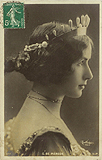
At the height of her renown, Belle Époque dancer Cléo de Mérode was arguably the most photographed woman in the world. Reproduced on postcards, her portraits traveled around the globe. Through this postcard stardom, Mérode pioneered a brand of celebrity that prefigured that of Hollywood stars in the decades ahead.

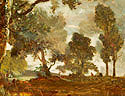
Widespread emigration from the Scottish Highlands in the nineteenth century offered subject matter not only to genre painters but also to landscapists, who found inspiration in the desolate depopulated landscape. This article examines the works of four artists who engaged with this subject and, in so doing, became part of a larger phenomenon of cultural self-invention that characterized Scotland in the Victorian age.

This essay offers a close reading of Gustave Moreau's Oedipus and the Sphinx (1864), informed by the artist’s statements and contemporary criticism. While traditionally the painting has been read as an allegory of spirit vs. matter, the author demonstrates that its significance may be more complex and that the sphinx may be seen as an archetypal figure for the very poetic and pictorial ideals that held the artist in thrall.

The French architect Pierre-Charles L'Enfant, best known for his plan for Washington, D.C., also produced several important decorative works in the 1780s. Focusing on these works, the author explores L'Enfant's invention of an iconography that signified the establishment of a new nation and its revolutionary claim of independence.

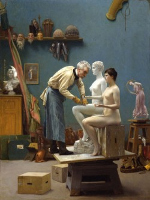
This article examines the iconography of eroticism that informed the design of Parisian brothel interiors in the late nineteenth century.



 All articles are available as PDFs.